Loading...

Truth First, Healing Second

If there’s one thing I know for sure after being here 61 years, it is that people will let you down. Count on it.

Maybe it’s part of the human experience, because I haven’t been immune to disappointing others.

I’m not writing this as a rebuke, but rather, a cautious reminder not to put all your eggs in the basket labeled Homo Sapien. At best, we are good people endeavoring to be less flawed; and on the other end of the spectrum, we embrace with gusto, greed, mean-spiritedness, and blind self-centeredness.

Better to put your Faith in yourself first and foremost. And if you Believe, in the infallible Power of the Creator.


Sending Love and Light to All in these turbulent times.


Hungarian Plum Cake (my quickie version)

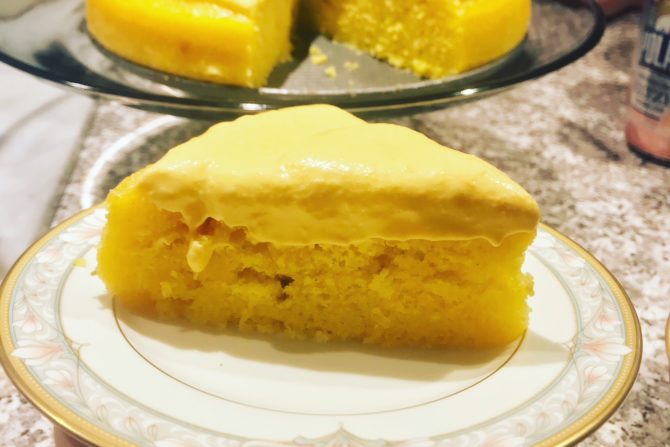
Late summer plums – gloriously transformed.


What to do when the orchard at the local farmers market sells you unpalatably sour plums? Make a gluten-free plum cake, of course!

I thought briefly about tossing the batch of tart, bone-dry fruit to our squirrels but then remembered a recipe I tried two summers ago and loved – Hungarian Plum Cake – basically a vanilla cake festooned with halved plums.

Tradition calls for halving the plums and placing them atop the cake batter before popping in the oven. But since I had an abundance of the gorgeous purple gems on my hands, I even tossed some into the batter.  It ups the fiber content and gives the cake a regal hue.

As I do 90% of the time, I use a trusty box of  King Arthur Gluten-Free Vanilla Cake Mix as my base. Sometimes I’ll enhance it with tangerines, pineapples, cherries, or loads of coconut. But last week, plums took center stage. I love King Arthur mixes because they’re not overly sweet, which allows for the secondary ingredients to shine. This was completely the case with the plums. Even though they were inedibly tart in the raw, the baking process softened them and alchemized the flavor to deliciously mellow, which paired perfectly with the softness of the vanilla cake.


Raw and ready…

It’s not absolutely necessary to have a VitaMix, but nothing turns raw ingredients into an irresistibly velvety texture like a VitaMix. If you don’t have one, just do your best with a blender.

You’ll see from the pre-baking photos a bit of oil oozing at the sides of the cake pan. That’s because I gave up non-stick sprays years ago. Couldn’t stand their unnatural taste and ingredients (and how they polluted my kitchen air!) Using light olive oil has proven to be the perfect solution. Give it a try, I think you’ll be happy with the results.

Happy Baking!


Quickie Hungarian Plum Cake

Ingredients:

1 box King Arthur Gluten-Free Vanilla Cake Mix

About a pound of fresh plums, washed, pitted, and halved.

Light olive oil (extra virgin will burn) for greasing the pan


Instructions:

Preheat oven to 375 (the box calls for 350, but the addition of ‘wet’ fruit will require higher temperatures to cook the cake properly

Blend the cake mix according to instructions in a large mixing bowl. Scrape into a VitaMix beaker or large blender. Add about half the washed and pitted plums (no hard and fast rules here). Blitz until plums are thoroughly blended (starting on low speed and moving gradually to high).

Pour about 1/3 cup olive oil into a 13×9 glass or ceramic baking dish and coat bottom and sides thoroughly by tilting the baking dish. Add cake batter. Take remaining plum halves and dot the top of the cake with them (it’s OK if they sink a bit).

Bake at 375 for 25 minutes. Then check the cake. Every oven’s a little different. If the center is still soft or liquidy, keep baking, checking every 10 minutes. When center looks and feels just firm, turn oven off and let cake cool in the oven for at least 20 minutes. It will continue baking, but not at an aggressive level that will dry it out.

Remove cake from oven and serve slightly warm or cool.

Optional: Dollop with whipped cream (regular or vegan) or a scoop of vanilla ice cream.


Delicious…and even a little nutritious.

Making up for what was lost

Rosemilk-rosemilk-rosemilk.

The words came, with a sudden forcefulness, as I lay soaking in a sunken pre-war bathtub filled with mineral water.

I don’t live far from the Roosevelt Baths in Saratoga Springs, and ‘take the cure’ whenever I can. This was my second visit in less than a week since a stubborn cold had progressed to a weeks-long ear infection. Feeling lethargic and a bit discouraged, I knew a mineral bath would shift the needle, even if just a bit. In addition to self-care measures, I’m a believer that just about any ailment can be traced to a psycho-spiritual root – also known as a cloying emotional imprint that’s begging for a little air. My lingering ear infection had been impervious to two different barrages of potent antibiotics and my patience was dissipating.

What am I purging with this infection? What do I need to heal? More to the point, what do I need to feel?


I bobbed placidly in the mineral water’s murky depths and felt my throat tighten – still my default response to punch back tears. A random thought was suddenly on the radar: my status (along with legions of others) as one of the infants of the 60’s and 70’s, swindled out of basic and inherent nutrition. Both infants and mothers of the era were caught in the devious crosshairs of the dairy lobby, whose profiteering mission was aided by the American Medical Association, which reportedly approved evaporated milk as the baby formula of choice for the masses because it was ‘safer and more effective’ than breast milk. Never mind that invaluable antibodies and nutrients were being omitted – canned, short-sighted convenience was where it was at back then.


Consequently, my three siblings and I were routinely plagued with ear infections throughout our childhood years. They were painful recurrences in more ways than one. All we could do when afflicted was lay on one side, grimacing as the mandatory medicated eardrops (heated in a double-boiler on the stove) trickled towards the red and swollen eardrum. Later, we’d mitigate the pain with the companionship of an electric heating pad, pressed protectively against the side of our head. This went on for days until the infection would mercifully and mysteriously evaporate. But there was always a next time and we lived in dread of it. Would things have been different without corporate interference? My guess is, probably, but we’ll never know.


Historical trends show that our culture began looking askance at breastfeeding (considering it ‘uncultured and low-class,’) at the turn of the 20th century. By the time the 50’s and 60’s rolled around, the act of breastfeeding (in public or private) was unthinkable. I remember vividly, as a high school junior in 1981, watching Good Morning America in astonishment as a group of radical young moms declared their determination in taking back their right to breastfeed. Looking back, I’m astonished at the women’s courage in being at the vanguard of redefining a perfectly natural practice and eradicating labels such as ‘savage’ and ‘disgusting.’ While the more convenient and sanitized practices of the 60’s and 70’s may have made society feel more at ease, there were millions of babies deprived, at a crucial stage, of irreplaceable nutrition, as well as Madonna-child bonding the way nature intends it.


Couple that with having a mother who possessed an aversion to affection but was perversely gifted with a bent for criticism, and it adds up to a pretty discernible Mother Wound – a term now categorized as an actual psychological phenomenon, and why not? Who on this earth has the power to affect us more deeply? Psychology Today describes the Mother Wound as ‘rooted in a loss or lack of mothering.’ Often handed down through generations, it can and does have a direct bearing on self-worth. Not a new topic for me – I’ve been hard at work on healing it for years, and while I’ve made tremendous progress since the age of 20, life has ways of handing you remnants of unfinished business – even in the unlikely setting of a mineral bath.


I sat with the emotional ache a bit more, gazing at the soft glow of the flickering candle at the edge of the bathtub. Abruptly, my thought-train took a hard left and was speeding towards a vision of ice cream. Not all that unusual given it was hot, humid July afternoon, but the image of a dish of soft vanilla, ceremoniously crowned with a swirl of aerosol whipped cream wouldn’t budge. The billowy purity of it called to me. Even though I knew how wonderful it would taste, I’m not usually seized by ice cream cravings, so I gently inquired why I might be suddenly having one. I assessed both the desire as well as my deep-dwelling needs which lay beneath it. All too often, my bursts of insistence for a particular food translate to an unmet need. Without judgment, I did a quick survey and relaxed into the truth: Undoubtedly, the ice cream would taste good, but would it fulfill what I needed? And with a little kind-hearted exploration, I realized my actual needs were emotional comfort, empathy, plus a little something that tasted good, which is about when I got the rosemilk bulletin. Satisfied, I settled back into water, knowing my cupboard was already stocked with organic rose petals and hemp milk.


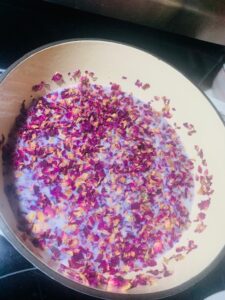
Petals, gently steeping

An hour later, I was at the stove, alchemizing the ingredients. I’m long over the siren call of toxic convenience foods and instant gratification, and was happy to engage in the process of steeping a quart of warming hemp milk with a heaping cup of dried rose petals. Stirring occasionally with a wooden spoon I avoided a boil, which would burn the milk and damage the delicate oils of the rose petals. When the milk became a pale pink, I shut the heat off, covered the pot and let it all steep for 30 minutes. The incremental straining of the petals was labor-intensive and involved scooping out small handfuls of soggy petals and squeezing the liquid out over a mesh sieve them until all the milk was wrung out.


The milk was reheated to just above warm, then I whisked in some cacao and frothed it all in the Vitamix. The result was astonishing. I’d never tasted anything quite like it: potent and delicate at the same time. The flavor combination was otherworldly, but it was the feeling it left me with that I’ll remember the most.


The rosemilk brought the grounding and comfort I was seeking, along with an unexpected revelation: If not for the mandated diet of bottle formula, my mother never would have begun watching Days of Our Lives. But alas, it coincided with my 2 p.m. bottle-feeding. My mother became enraptured with the soap opera and it’s drama-infused storylines and so did I – as soon as I was old enough to follow the storylines. Days of Our Lives proved to be a longstanding bonding agent in our sometimes-tumultuous relationship which we otherwise never would have had…always a silver lining.


It’s said that roses are a wonderful agent for heart-opening, and so is cacao. It’s also heartening to know both are high in phytonutrients and antioxidants…in other words, no risk of elevated inflammation or an energy crash.

Creamy consolation…made with Love


The combination of rose petals plus cacao in a creamy base of a nutritious milk not in existence in the 60’s made it the healing agent that ice cream never could be. Not that I’ll never eat ice cream again – far from it. But it wasn’t what I needed that day. I finished my mug of rosemilk, and even though I wasn’t out of the woods with the ear infection, crawled into bed and slept like a baby that night.


Adding a Little Elegance

I first discovered these amazing hors d’oeuvres when I was a kid perusing my mother’s latest issue of the late, great Gourmet magazine. We made them for cocktail parties and other special occasions. They are comforting and delicious – like little bites of warm cheese bread. Having their origin in Paris (where else?), their proper name is Gougères. I’ve always called them cheese puffs. The choice is yours.

I’ve made the recipe over to be gluten-free and I think it makes the chewy treats even more dense and delicious. These can also be baked and frozen for a quick and easy snack. This requires prep time, plus overnight refrigeration prior to baking. They’re absolutely worth the effort!

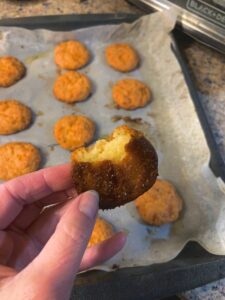
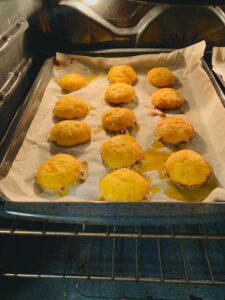
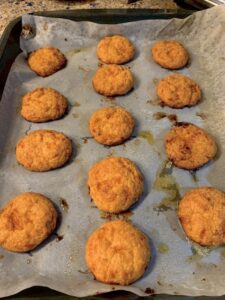
Cheesy, aromatic perfection


Gluten-Free Gougères

Makes about 3 dozen

Ingredients:

1/2 cup vegan milk or creamer (unflavored)

1/2 cup room-temperature water

1/2 teaspoon salt

1 stick unsalted butter

1 cup gluten-free all-purpose flour

5 large eggs, room temperature

1 3/4 cup of grated hard cheese (the purists like Gruyère or Comté, but in the absence of those pricier options, sharp cheddar works just fine)

Instructions:

In a medium-sized heavy sauce pan, bring the first four ingredients to a boil, at first whisking occasionally to blend together. Once blended, whisk rapidly. The mixture will morph into a dough, at which point, it may be better to switch to a heavy wooden spoon. Dough should be dense and shiny. Remove from heat.

In a blender, blitz eggs until smooth. Pour gradually into the dough, about a half-cup at a time until each portion is blended. This will take some muscle, but keep at it. After the last of the egg is blended in, gradually begin to add the grated cheese, again, a bit at a time until blended.  Place dough in an airtight container and refrigerate overnight.

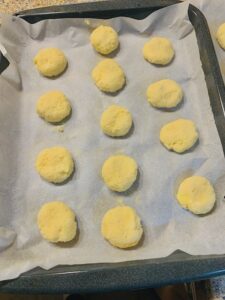
Discs, ready for the oven


When ready to bake, preheat the oven to 425 degrees. Have two baking sheets ready covered in parchment paper. Using a metal spoon, scoop out about a tablespoon of dough and roll it into a ball between your palms. Place it on the parchment paper and press slightly so it’s more a disc than a ball. Keep going until you have a full tray, leaving several inches of space in between each disc.

Bake for five minutes, then turn the oven back to 375 and bake for 10 minutes, or until bottoms look browned and a bit crisp. Transfer to a serving platter when ready and serve warm. These may also be frozen in airtight containers or plastic bags.

Serve with your favorite wine, or in my case, herbal tea. Bon Appetit!


Opening the Heart, One Sip at a Time


Hello there. I’m back. And yes, it has been a minute. The last blog I did nearly one year ago on the mean-girl phenomenon known as the abusive sleepover gutted me. It also gut-punched those close to me, especially my family, who had no idea the the emotional abuse I suffered as a child was not limited to the garden-variety bullies that so many of us deal with growing up. As was ghoulishly depicted in those ‘70s horror flicks where the operator warns the babysitter that the recent barrage of threatening phone calls are coming from inside the house, much of the damage incurred during my tender formative years came from a small but persistent circle of friends who consciously, or more to the point, unconsciously used me (the ultimate soft target who would not fight back) as punching bag practice.

It was only two years ago that the truth I was completely unaware of lurched forth out of the mouth of the moderator of a self-development workshop I was in the midst of. It was startling, somewhat saddening, but eventually, relief washed over me: this was the missing link from my subconscious and a huge answer to why, after so much therapy, self-reflection, and general life-success I still felt a sense of tormented discontent.

One thing I’ve never done is run from the truth once it’s revealed to me. The sudden awareness that, during those vulnerable years when I needed love and acceptance the most, everyone but my German Shepherd was throwing stones at me hit me like a collapsing wall of bricks. I had no choice but to grieve the good experiences and healthy bonds I never had. It was challenging enough to process wounds I was aware of (from knuckle-dragging bullies, emotionally unavailable parents, and toxic extended family members), but to discover the betrayal I’d buried so deeply in my psyche was truly remarkable.

I never felt betrayed by the bullies.  Intellectually, I know they’re both strangers and would-be tough guys who feel it’s their duty to dole out belittlement and insults. But when such behavior comes from a person who, by definition, is supposed to be in my corner, the degradation of self-worth is crippling, and so is the shame that effectively mummifies the stage of life where self-esteem blossoms.  I’ve had significant time to process this and I can say for sure, the wounding from friends is far deeper and more damaging than from an asshole who shouts at me from across the playground.

Betrayal, by the way, is one of the most difficult wounds to recover from. And haven’t we all been there? I know I’m hardly alone, and that’s a big part of why I write about my past so openly. I know I’m not the only one who’s been mistreated by a friend, whether it’s outright cruelty, a micro-aggression masquerading as humor, or the expectation of being the free therapist without a thought of reciprocity. The levels of it vary, what’s constant across the board is the silent shame. There’s simply no adequate forum for addressing the grievances or admitting to the hurt. Well, that is, until today. I don’t write this stuff for fun, believe me; there are other things I’d rather be doing. But it’s a topic whose time has come and I challenge anyone to challenge me that it’s not just a worthy topic but a crucial one.

Recovery can’t be rushed and I haven’t tried to ricochet through this difficult season. I took time out from blogging here, but kept at my book-in-progress and began a Substack, where my story of overcoming a bad childhood gets increased visibility. The healing took and continues to take many forms, from crying til my eyes were out of tears to seething with rage. Eventually, with time and grace, I believe the resentments will dissipate in their own time. In the meantime, I nourish myself with honesty, good people, good therapy, and good food. So, what better time than in this era of returning to wholeness to delve into the art and practice of drinking ceremonial cacao?

I was introduced to the concept during the pandemic via Instagram, where I discovered Paula Gibson and Heart Tribe Cacao. It didn’t matter that she was based in Dublin – the whole world was connecting through Zoom in 2020, so I hopped aboard a six-week class, which proved to be the heart-opening endeavor I was hoping for. Paula taught us that cacao is an ancient ingredient used by indigenous people for millennia for healing the body and soul. Biochemically, it’s said to have 40 times more antioxidants than blueberries as well as 400 active ingredients useful for meditation. It’s also beneficial for the lungs and respiratory system. Ceremonial grade cacao’s inherent stimulant, Theobromine is related to caffeine, but differs by a single molecule. Paula explained that because of this, it doesn’t enter the nervous system, but rather is absorbed through the dilation of blood vessels, resulting in energy boosts minus the jitters. All I know is, not only do I enjoy the delicious, mellow flavor of ceremonial grade cacao, it imbues me with an improved peacefulness and sense of wellbeing. But I drink it mindfully and don’t gulp it down in a hurry – how cacao is approached is key.


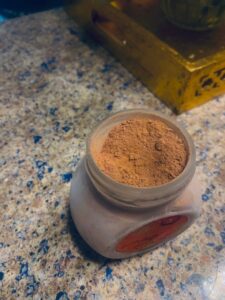
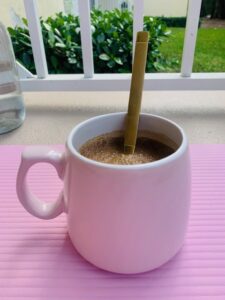
Ready for ceremonial heart-opening


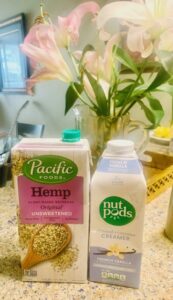
In addition to quality cacao, a healthy base is crucial…

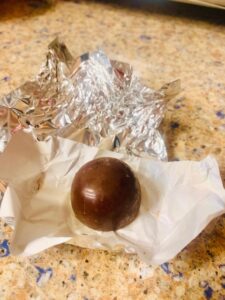
When I’m craving sweets or just a little good-tasting comfort, hot chocolate is still a go-to. But the ingredient list has changed from a dried packet of sugar, milk, and powdered chocolate to a noticeable, but completely practical, nutritional upgrade. The recipe below isn’t written in stone. Use whatever type of unsweetened cocoa powder you have on hand and if you want at a later date, experiment with ceremonial grade. Some of the brands I’ve tried and liked include Keith’s Cacao and Rukuxulew, an all-female, 100% Mayan-owned small business based in Lake Atitlán, Guatemala.  I always pair the cacao with a non-dairy milk (unsweetened Hemp is my current favorite) and add my own form of sweetener. Ceremonial shamans may shudder at my choice of a singular chocolate bon-bon, but it melts beautifully in warm milk and adds the perfect amount of sweetness for me. There are times when I do a deep-dive into purity and use no sweetener, but most of the time, I want a lil’ sugar.

A singular bon-bon rocks my WORLD!


After six weeks of connecting with like-minded women and being led on shamanic meditations with Paula Gibson, I knew I wanted my relationship with cacao to continue, and I remain a regular user. It’s a natural progression from being a long-time hot chocolate lover. Growing up in the ‘70s, my favorite wintertime treat was a cup of warm (not scalding) hot chocolate, served in my bunny mug with a few mini-marshmallows floating on the velvety brown surface. My chocolate of choice morphed from Swiss Miss and Nestle’s Quick to unsweetened Dutch cocoa and now, raw cacao. Since Paula’s workshop, I’ve participated in a few of group cacao events, as well as solo heart-opening excursions to the great within. Especially in the winter, I often make myself a cup of cacao simply to treat myself and satisfy a craving. No rules necessary – pure enjoyment is its own reward.

Food doesn’t solve everything, but in this case, a cup of hot cocoa really can make it better.


My favorite retreat…


More sweet, clean recipes such as this one can be found in my dessert cookbook, Sweet Comfort, and in my cookbook-memoir, Clean Comfort, available on Amazon.


Hot Cacao

Serves 1


Ingredients:

1 ½ cups of milk (I like unsweetened Hemp milk)

1 tablespoon unsweetened cocoa or ceremonial grade cacao

Sweetener of choice is optional but honey, maple syrup, Stevia, or a sweetened piece of chocolate are some ideas.


Instructions:

In a small saucepan, heat milk over medium-low heat until steam begins to arise or it just starts to bubble. Stir often so it doesn’t stick to pot and make sure it doesn’t boil.

Add cacao and whisk vigorously with a wire whisk until blended. Add sweetener and whisk some more. Pour into a mug and enjoy. Introspection is optional…